---
title: The Power of Gaze
description: Training vision in the dojo to achieve objectives
image: https://sandiegobudokan.com/hubfs/serious-man-gaze-pensive-person-footage-267666627_iconl.png
---
[Skip to content](https://sandiegobudokan.com/blog/the-power-of-gaze#main-content)
[](https://sandiegobudokan.com)
- [Home](https://sandiegobudokan.com)
- [Instructors](https://sandiegobudokan.com/instructors)
- [Schedule](https://sandiegobudokan.com/schedule)
- [Blog](https://sandiegobudokan.com/blog)
- [Get Started](https://sandiegobudokan.com/get-started)
# The Power of Gaze

[Joshua Shapiro December 16, 2025](https://sandiegobudokan.com/blog/author/joshua-shapiro)
- [Essay](https://sandiegobudokan.com/blog/tag/essay)
- 3 mins
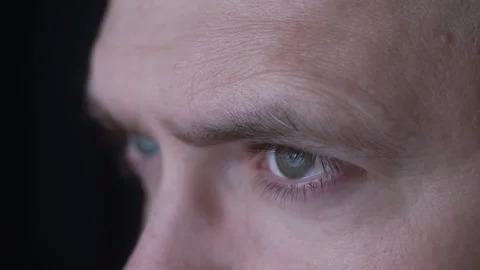
Think back to the last conversation you had with someone that locked eyes with you and never looked away. This direct and focused attention is ... flattering, unsettling. Someone is giving you the entirety of their attention and you are trapped with nowhere to hide. Looking directly back into their eyes is confrontational. Looking away feels like a retreat.
Now think of the last conversation you had where someone looked anywhere and everywhere except at you. This avoidance is a sign of discomfort and a desire to escape or retreat.
Gaze plays a major role in the ability to escalate or de-escalate a conflict. Where and how you look will signal your ability and aptitude to engage in a conflict. Your vision and gaze modifies your ability to sense, target, and eliminate threats, and can change an adversary's willingness to negotiate or back down.
*In the dōjō we train our gaze. *
Stare into the distance, slightly below the horizon. Look at nothing in particular, and send your awareness outwards and sideways. Notice motion and rhythm, but do not focus on any one thing. In our dōjō we refer to this as an allocentric gaze\*. It forces your awareness outwards, and moves your mind to a receptive state where you are sensitive to unknown threats within a wide field of view. Holding an allocentric gaze for a long period of time is challenging, and more than a little practice is needed to maintain this gaze without the mind drifting. While practicing an allocentric gaze I often think of the quote by Miyamoto Musashi, "see distant things as if they were close and take a distanced view of close things," and I evaluate every movement in my field of view, be it near or far, with the same mental arithmetic. An adversary will experience your allocentric gaze as neither confrontational, nor avoidant. You will appear calm, aware, and ready to strike in any direction at any time.
Now, focus intently on a single point. Choose a spot on the wall, the back of your hand, or an object on your desk. Focus with the entirety of your being on that one thing. We call this an egocentric gaze\*. Memorize every shape and line. Maintain the gaze. Notice the movement of your eyes. At some point you will feel an overwhelming desire to break this focus. Maintain the gaze and count to five. Do not allow yourself to release the gaze involuntarily. Decide to release the gaze, then relax. This gaze is direct and purposeful, and it is the gaze used to aquire a target, then strike powerfully and decisively. It is the gaze a predator uses as it chases down it's prey. Every fiber in your body becomes unified behind the object directly in the middle of your vision. Your adversary should be terrified by your egocentric vision. When my instructor focuses on me with an egocentric gaze I have the feeling that he would like nothing more in the world than to see my insides strewn across the ground.
Things get interesting when combining an allocentric and egocentric gaze. Put yourself in a many-to-one, multi-attacker scenario. Direct your gaze slightly down and look into your peripheral vision as your training partners circle. Use your allocentric gaze to feel their intentions as you move. Before any one opponent has an opportunity to launch an attack, switch your gaze and focus intently on a specific body part, then attack that target. Immediately after the attack disengage and reset to an allocentric gaze. Repeat with each opponent, moving between an egocentric and allocentric gaze. Sensing, then attacking, sensing, then attacking.
Through our keiko we study the impact of gaze and learn to apply it in combative situations, but there is equal utility for controlling gaze in daily life. Through our keiko we choose when and how to hold someone or something firmly in our gaze, and when and how to release. You, of course, will never focus on a acquaintance or coworker with the terrifying intensity you would use in the dojo, but you will develop the ability to focus your attention broadly or directly as the situation warrants.
\*Allocentric and egocentric vision refer to the point of reference. In allocentric vision, objects in the field of view are located in relationship to each other. in egocentric vision, objects are located in relationship to the viewer. In the dōjō we refine this definition to include the viewer and the viewer's intention. The viewer (you) is either seeing the world from outside of yourself (allocentric), or seeing the world from your perspective (egocentric). The focus of your attention is either the entirety of your field of view (allocentric), or a specific point on a specific object (egocentric).
### Subscribe to Sword, Brush, & Stone

### Joshua Shapiro
Joshua Shapiro is CEO of Meadowlark Engineering, a full service software development company. He has a Ph.D. in electrical engineering, and is a deshi of Ittō Tenshin-ryū, Yamate-ryū, and Goseki-ryū with over two decades of martial arts training.
## Latest posts
- [ALL POSTS](https://sandiegobudokan.com/blog/all)
[](https://sandiegobudokan.com/blog/on-the-events-in-minneapolis)
[Essay](https://sandiegobudokan.com/blog/tag/essay)
Jan 27, 2026 7:37:22 PM
### [On The Events in Minneapolis](https://sandiegobudokan.com/blog/on-the-events-in-minneapolis)
[](https://sandiegobudokan.com/blog/the-secret-art-of-the-carpenters-plane)
[Reprint](https://sandiegobudokan.com/blog/tag/reprint)
Jan 6, 2026 12:33:48 AM
### [The Secret Art of the Carpenter's Plane by Yamaoka Tesshu](https://sandiegobudokan.com/blog/the-secret-art-of-the-carpenters-plane)
---
[](https://sandiegobudokan.com)
Copyright 2025 San Diego Budokan
- [Home](https://sandiegobudokan.com)
- [Sword, Brush, & Stone - Blog](https://sandiegobudokan.com/blog)
- [Contact](https://sandiegobudokan.com/get-started)
- [Schedule](https://sandiegobudokan.com/schedule)
- [Instructors](https://sandiegobudokan.com/instructors)
- [Heiho.org](https://heiho.org)
---
```json
{
"@context" : "https://schema.org",
"@type" : "BlogPosting",
"author" : {
"@type" : "Person",
"name" : "Joshua Shapiro",
"url" : "https://sandiegobudokan.com/blog/author/joshua-shapiro"
},
"dateModified" : "2025-12-16T00:14:23.797Z",
"datePublished" : "2025-12-16T00:14:23.000Z",
"headline" : "The Power of Gaze",
"image" : [ "https://sandiegobudokan.com/hubfs/serious-man-gaze-pensive-person-footage-267666627_iconl.png" ],
"mainEntityOfPage" : {
"@id" : "https://sandiegobudokan.com/blog/the-power-of-gaze",
"@type" : "WebPage"
},
"publisher" : {
"@type" : "Organization",
"logo" : {
"@type" : "ImageObject",
"url" : "https://sandiegobudokan.com/hubfs/SDMon-3.svg"
},
"name" : "San Diego Budokan"
}
}
```