
Yamate-Ryū Aikijūtsu
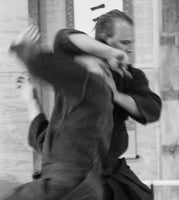
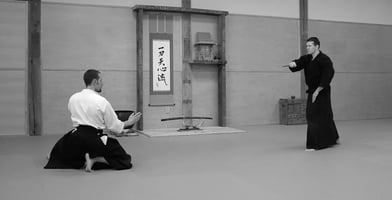
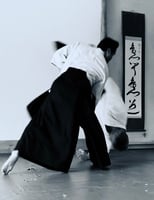
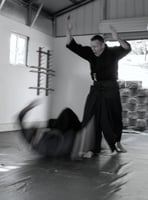
Yamate-Ryū is a sophisticated martial tradition that traces its origins to close-quarters, battlefield combat in feudal Japan.
For centuries Aikijutsu was a closely guarded secret.
The secrets of Yamate-ryu are open to any with an inquiring mind and the fortitude to persevere.
What is Yamate-ryū?
.png?width=117&height=400&name=shodo-yamate-ryu3-88x300(1).png) Yamate-ryū Aikijūtsu (山手流合気術) traces its origins to the battlefields of Japan before unification under the Shogun. It consists of techniques to both maintain control of a weapon, and disarm and defeat an armed opponent in close-quarters combat. When Japan transitioned from open warfare to feudalism the knowledge became the closely guarded secret of powerful clans. Yamate-ryū evolved when these former Samurai adapted to civilian rule after the Meiji Restoration in the late 19th century. It incorporates significant portions of Daito-ryū but is distinct in several respects. It continued as a family art until it was passed to Frederick Lovret in the 1970's and brought to the United States where it now resides.
Yamate-ryū Aikijūtsu (山手流合気術) traces its origins to the battlefields of Japan before unification under the Shogun. It consists of techniques to both maintain control of a weapon, and disarm and defeat an armed opponent in close-quarters combat. When Japan transitioned from open warfare to feudalism the knowledge became the closely guarded secret of powerful clans. Yamate-ryū evolved when these former Samurai adapted to civilian rule after the Meiji Restoration in the late 19th century. It incorporates significant portions of Daito-ryū but is distinct in several respects. It continued as a family art until it was passed to Frederick Lovret in the 1970's and brought to the United States where it now resides.
Many arts hide and obscure their advanced teachings and claim "secrets" that will be revealed. Yamate-ryū openly teaches the most important concepts from day one. There are no pretenses or obfuscations, just hard-work. The foundational concepts are:
- Ki no Musubi (気の結び) - Blending the spirit
- Kokyu-hō (呼吸法) - Breathing method
- Irimi-hō (入り身法) - Entering the body method
- Gyaku-tai (逆体) - Reversing the body
- Hito-e-imi (一重身) - Single-Ply Body
- Mawashi-hō (回し法) - Rotation method
With serious training any person, regardless of size or strength, will develop the physical and mental coordination to deal with stress and conflict.
How does Yamate-ryū Compare to MMA and BJJ?
Modern sports like MMA and BJJ incorporate many aspects of Aikijutsu, however, they are ultimately constrained by rules and regulations that make them safer for competitors. The primary areas of similarity inlcude joint locks and methods of off-balancing the opponent using leverage and body-alignment instead of strength. The principal difference lies in the ultimate outcome. Unlike MMA and BJJ, Yamate-ryū does not assume a single unarmed opponent in a controlled setting. Throws and submissions in Yamate-ryū assume a weapon (typically a knife) and are completed while standing to account for multiple attackers.
Is Aikijutsu the same as Aikido?
Aikijutsu and Aikido are close cousins. The founder of modern Aikido, Morihei Ueshiba, was a student of Daito-ryū and practiced Aikijūtsu in his youth. As Ueshiba aged, became more spiritual, and witnessed his country ravaged by war he de-emphasized the aggressive, combat oriented aspects of Aikijūtsu and re-branded his style as Aikidō.
The primary difference lies in the teaching approach in the early phases of learning. Advanced practitioners in both styles look almost identicial.
Is Yamate-ryū Safe?
All martial arts carry a risk of injury, however, Yamate-ryū has a well-established pedagogy that carefully and methodically teaches the skills needed to practice safely. New students must learn and demonstrate a set of 30 techniques that are carefully constructed to teach proper body mechanics while avoiding injury. Advanced students develop the awareness and control to push training while remaining in a zone of safety. Yamate-ryū has far fewer injuries than MMA or BJJ because of the careful and comprehensive teaching methodology.